Published 15 July 2026
Why Pest Infestations Increase During Hot Weather in South West London
Hot summers consistently bring a sharp rise in pest problems South West London, affecting homes, businesses, and public spaces alike.
As temperatures climb, pest activity accelerates, breeding cycles shorten, and infestations spread more aggressively.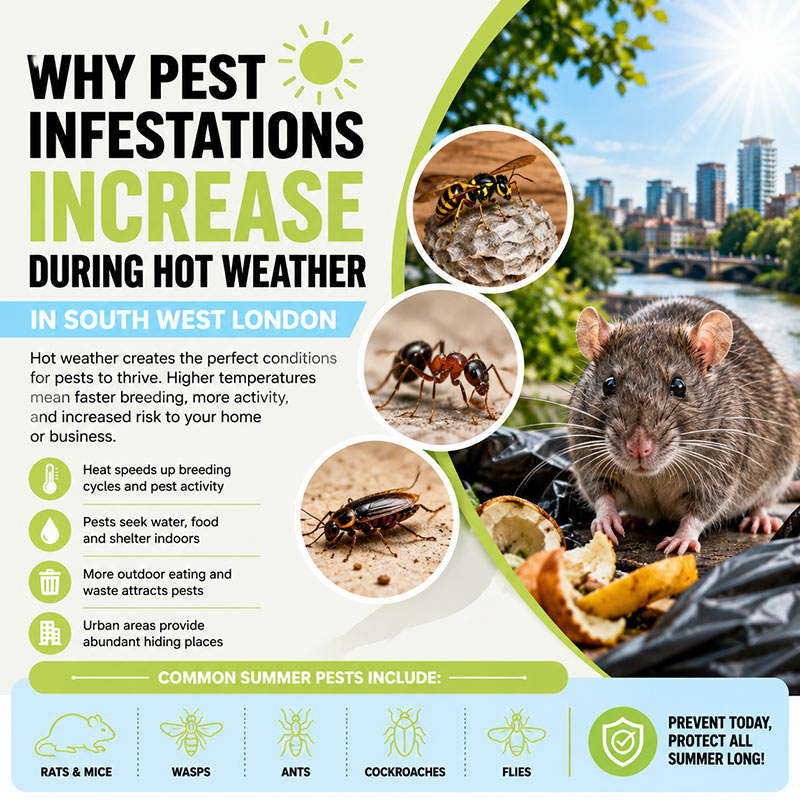
In South West London, where dense housing, green spaces, rivers, and commercial hubs intersect, summer pest infestations become a predictable and serious challenge.
At On Time Pest Control, we observe clear seasonal patterns that explain why hot weather pests thrive and how property owners can protect their premises effectively.
The Direct Impact of Heat on Pest Activity
Heat is not merely a background condition, it is a biological trigger.
Many pests are cold-blooded, meaning their metabolism speeds up as temperatures rise. This leads to increased feeding, faster reproduction, and wider movement.
In seasonal pest problems London, hot weather accelerates egg hatching, shortens gestation periods, and allows multiple generations to emerge within a single summer.
What begins as a minor issue in late spring can become a full-scale infestation by mid-summer without professional pest control South West London intervention.
Why Pests Increase in Summer Across South West London
Several environmental and structural factors unique to South West London contribute to summer infestations:
. Urban density creates abundant shelter and food sources
. Older housing stock offers cracks, voids, and ageing pipework
. Parks, gardens, and waterways support rodent and insect populations
. Commercial waste and outdoor dining attract scavenging pests
These conditions explain why pests increase in summer more dramatically in this region than in less urbanised areas.
Pests Attracted by Hot Weather: The Most Common Summer Threats
Rodents Thriving in Warm Conditions
Rats and mice remain a leading cause of pest problems South West London. Hot weather increases food availability while dry conditions push rodents indoors in search of water. Once inside, they breed rapidly and cause extensive damage to wiring, insulation, and structural materials.
Rodents are particularly active near:
. Kitchens and food storage areas
. Basements and lofts
. Drainage systems and sewers
Without timely pest control South West London, infestations escalate quickly.
Wasps and Bees Becoming Aggressive
Wasps are among the most dangerous hot weather pests.
Warm temperatures allow colonies to expand rapidly, and by late summer nests can contain thousands of insects. Increased human outdoor activity leads to higher sting incidents, particularly around gardens, pubs, and commercial premises.
Professional removal is essential, as disturbing nests without training significantly increases risk.
Ant Infestations in Homes and Businesses
Ants are classic pests attracted by hot weather.
Heat intensifies their foraging behaviour, sending trails into kitchens, bathrooms, and commercial food environments.
Once established, colonies become extremely difficult to eliminate without specialist treatment.
Cockroaches Flourishing in Heat and Humidity
Cockroaches thrive in warm, humid conditions, making summer the peak season for infestations. They spread bacteria rapidly and are particularly problematic in:
. Restaurants and cafés
. Apartment blocks
. Boiler rooms and service ducts
Cockroaches represent one of the most serious seasonal pest problems London due to health and reputational risks.
Flies and Stored Product Insects
High temperatures accelerate decomposition, making waste areas highly attractive to flies. Food production and hospitality businesses in South West London experience increased contamination risks without proactive pest management.
How Summer Changes Pest Behaviour Indoors
Contrary to popular belief, pests do not only remain outdoors during summer.
Heat drives many species indoors to seek:
. Cooler environments
. Consistent water sources
. Reliable food access
This explains the spike in common summer pests London found inside homes during heatwaves.
Health and Property Risks of Summer Pest Infestations
Ignoring summer pest infestations carries significant consequences:
. Disease transmission from rodents and cockroaches
. Food contamination in residential and commercial kitchens
. Structural damage caused by gnawing and nesting
. Allergic reactions and stings from insects
For businesses, infestations threaten compliance, customer trust, and operational continuity.
Prevent Pest Infestations in Summer with Proactive Measures
Effective prevention requires early action.
Sealing Entry Points
. Repair cracks, gaps, and damaged brickwork
. install mesh on vents and drains
. Secure doors and windows properly
Managing Waste and Food Sources
. Store waste in sealed containers
. Clean food preparation areas thoroughly
. Avoid leaving pet food exposed
Controlling Moisture
. Fix leaking pipes promptly
. Improve ventilation in kitchens and bathrooms
. Reduce standing water in gardens
Professional Monitoring and Treatment
Routine inspections identify early signs before infestations escalate. Professional pest control South West London services ensure targeted, safe, and long-lasting solutions.
Why Professional Pest Control Is Essential During Hot Weather
DIY treatments rarely address the root cause of infestations.
Summer pests reproduce too quickly, adapt rapidly, and often nest in inaccessible locations.
Professional pest control delivers:
. Accurate identification of pest species
. Tailored treatment plans
. Safe application of regulated products
. Long-term prevention strategies
This level of control is critical during peak infestation months.
South West London’s Unique Summer Pest Challenges
From riverside properties near the Thames to high-density residential blocks, South West London presents diverse pest risks.
Each environment requires a specific strategy to manage pest problems South West London effectively throughout summer.
Long-Term Protection Beyond Summer
While summer is the most active season, infestations left untreated often persist into autumn and winter.
Comprehensive pest management ensures year-round protection, reducing recurrence and safeguarding health and property.
Conclusion: Staying Ahead of Summer Pest Infestations
Hot weather creates ideal conditions for pests to thrive, multiply, and invade properties across South West London.
Understanding why pests increase in summer, recognising pests attracted by hot weather, and acting early are the keys to effective prevention.
Professional, proactive pest control South West London remains the most reliable way to eliminate infestations and protect homes and businesses throughout the summer months and beyond.