Published 1 April 2026
Most Common Spring Pests in West London and How to Prevent Them
Spring marks a season of renewal across West London, but it also signals heightened activity from a range of persistent pests.
As temperatures rise and moisture increases, homes and commercial properties become attractive targets for nesting, feeding, and breeding.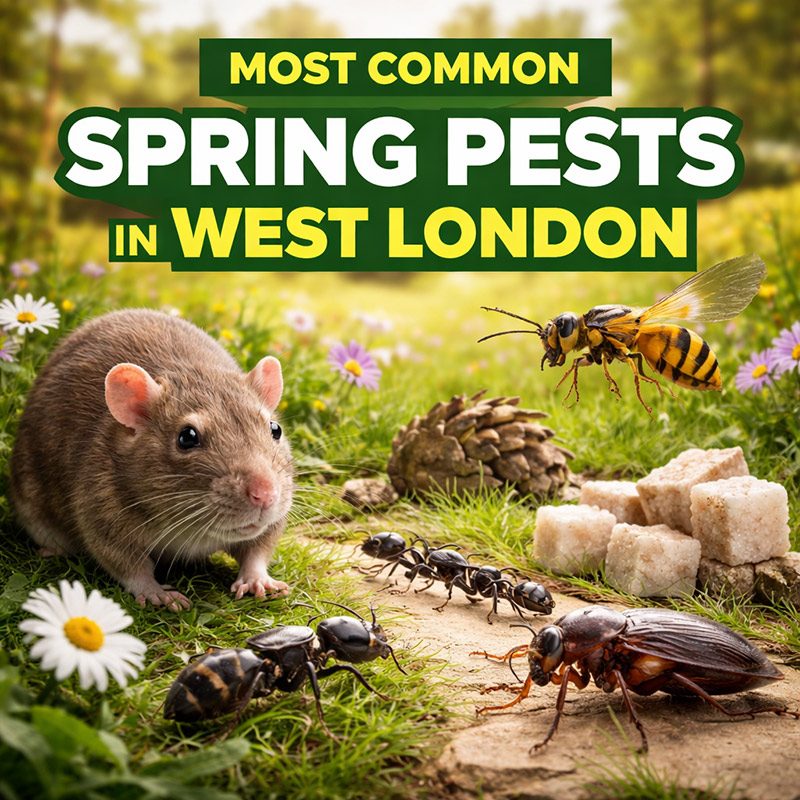
As a professional pest management provider, we understand the local ecology, building styles, and seasonal patterns that influence infestations across West London boroughs.
This comprehensive guide outlines the most common spring pests, the risks they pose, and the most effective prevention strategies to keep properties protected throughout the season.
Why Spring Pest Activity Surges in West London
Spring creates ideal conditions for pest proliferation.
Milder weather, increased humidity, and greater food availability draw pests out of winter dormancy. In West London, dense housing, period properties, green spaces, and urban waste streams combine to create prime environments for infestation.
Without proactive measures, minor pest sightings can quickly escalate into widespread infestations that compromise hygiene, safety, and property integrity.
Ant Infestations in West London Homes
Ants are among the earliest and most visible spring pests.
Black garden ants commonly invade kitchens, pantries, and utility rooms in search of sugary residues and food scraps.
Risks Associated with Ants
. Food contamination through foraging trails
. Structural disturbance near patios and foundations
. Persistent reinfestation when nests remain untreated
Prevention Measures
. Seal gaps, cracks, and service entry points
. Store food in airtight containers
. Clean surfaces to remove pheromone trails
. Address outdoor nests near walls and paving
Early intervention prevents colonies from establishing long-term strongholds within properties.
Rodent Problems: Rats and Mice
Rats and mice become increasingly active in spring as breeding cycles intensify.
West London’s older buildings, rail networks, and garden spaces provide ample shelter and food sources.
Health and Structural Dangers
. Transmission of leptospirosis, salmonella, and other diseases
. Gnawing damage to wiring, insulation, and pipework
. Contamination of food and surfaces
Rodent Prevention Strategies
. Secure refuse in sealed bins
. Block access points larger than 5mm
. Maintain gardens by removing debris and overgrowth
. Inspect lofts, basements, and crawl spaces regularly
Rodent control requires professional-grade exclusion and monitoring to ensure complete eradication.
Wasps and Early Nest Formation
Spring is when queen wasps begin establishing nests in lofts, eaves, garages, and sheds.
Early nests are small but grow rapidly as worker populations increase.
Why Early Action Matters
. Prevents aggressive colonies later in summer
. Reduces stinging risks to occupants and visitors
. Minimises structural disruption
Effective Wasp Prevention
. Inspect rooflines and outbuildings
. Seal gaps around soffits and vents
. Install insect mesh on air bricks
. Avoid leaving sweet foods uncovered outdoor
Professional nest removal in spring is safer, faster, and more cost-effective than dealing with mature colonies.
Cockroaches in Residential and Commercial Properties
Cockroaches thrive in warm, humid environments and become more active as spring temperatures rise.
They are particularly prevalent in flats, restaurants, and shared buildings across West London.
Problems Caused by Cockroaches
. Spread of bacteria and allergens
. Triggering of asthma and respiratory issues
. Rapid reproduction leading to severe infestations
Prevention and Control
. Eliminate moisture sources under sinks and appliances
. Seal cracks behind units and skirting boards
. Implement regular deep cleaning routines
. Schedule professional monitoring and treatment
Cockroach infestations require integrated pest management for long-term success.
Bed Bugs Re-Emerging in Spring
As travel increases and heating systems reduce, bed bugs resurface in spring.
West London’s high population density and transport links increase exposure risks.
Key Warning Signs
. Small bites in linear patterns
. Blood spotting on bedding
. Musty odours in sleeping areas
Preventative Actions
. Inspect luggage and clothing after travel
. Reduce clutter in bedrooms
. Use protective mattress encasements
. Act immediately at the first sign of activity
Early professional intervention prevents spread across adjoining rooms and properties.
Flies and Drain-Related Pests
Spring warmth accelerates fly breeding cycles. House flies, fruit flies, and drain flies are common in kitchens, bathrooms, and waste areas.
Associated Risks
. Transfer of pathogens onto food surfaces
. Persistent nuisance affecting comfort and hygiene
Fly Prevention Techniques
. Clean and treat drains regularly
. Secure doors and windows with screens
. Remove organic waste promptly
. Maintain external refuse areas
Drain inspections and sanitation treatments are highly effective in preventing recurring fly issues.
Why Professional Pest Control Matters in West London
DIY measures often address symptoms rather than root causes.
Professional pest control delivers targeted treatments, long-term prevention, and compliance with health and safety regulations.
As a trusted local provider, On Time Pest Control applies industry-leading techniques, environmentally responsible solutions, and local expertise to protect homes and businesses across West London.
Seasonal Pest Prevention Checklist
. Conduct spring property inspections
. Seal structural vulnerabilities
. Maintain hygiene and waste management
. Monitor lofts, basements, and gardens
. Engage professional services before infestations escalate
Proactive action significantly reduces pest risks throughout the warmer months.
Protecting Properties Throughout Spring and Beyond
Spring Pests are predictable, preventable, and manageable with the right approach.
By combining property maintenance, early detection, and professional intervention, infestations can be eliminated before they disrupt daily life or business operations.
We remain committed to delivering effective, discreet, and reliable pest control solutions tailored to West London’s unique challenges.